
Skip to content

Social Systems & Agent Dynamics

Opinion formation, crowd behavior, organizational workflows, market adoption

8 articles

Article

NetLogo BehaviorSpace: Systematic Parameter Sweeps and Experiment Design for Agent-Based Models

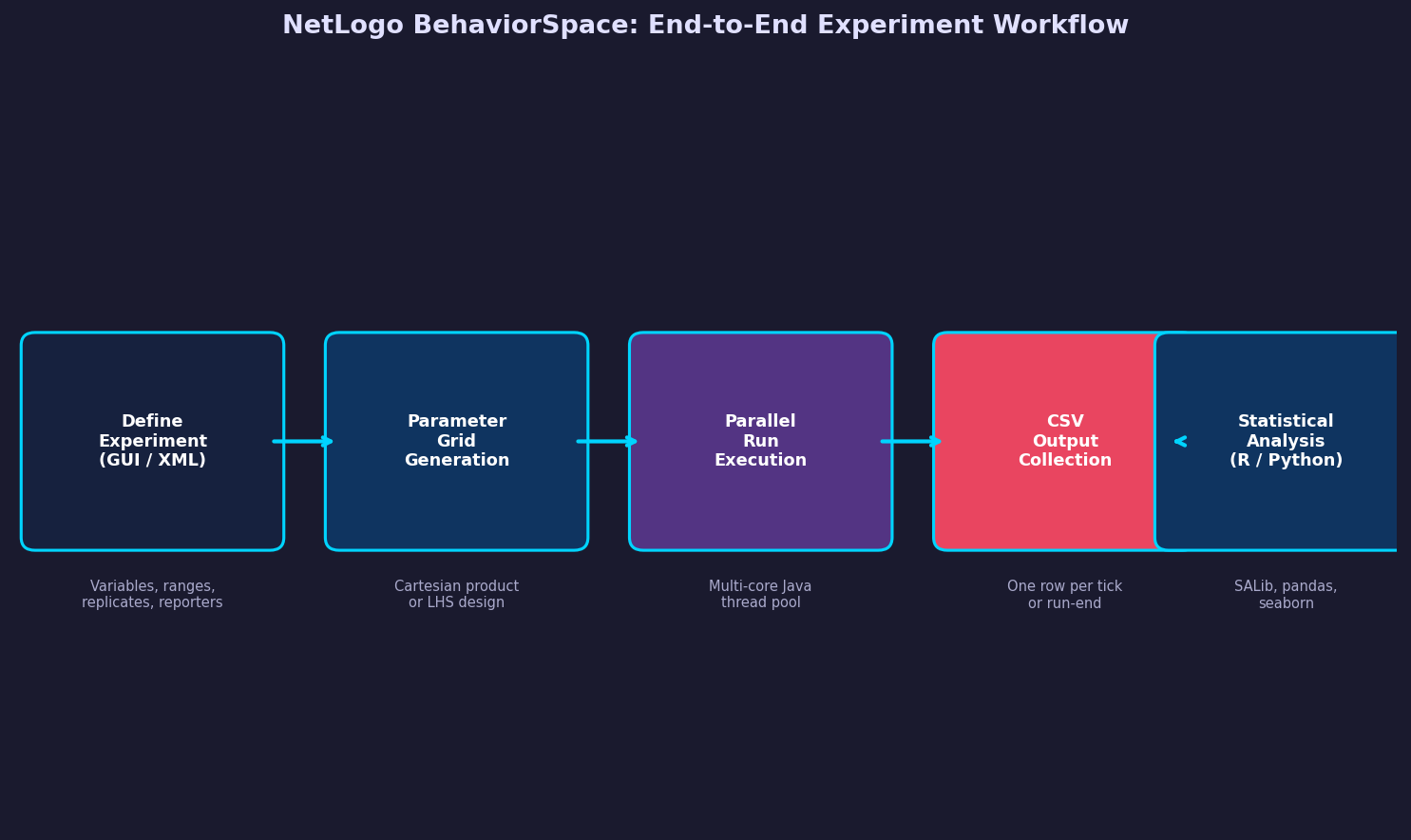
NetLogo's BehaviorSpace framework enables rigorous, reproducible parameter sweeps across agent-based models by automating factorial experiment execution, multi-core parallel runs, and structured CSV output. This article examines BehaviorSpace's experiment definition syntax, measurement strategies, parallel execution options, and integration with Python and R for downstream sensitivity analysis. From coarse exploration sweeps to Latin Hypercube designs, BehaviorSpace transforms NetLogo into a production-grade scientific instrument for social-system modelers.

By Jeff 8 views
Article

FLAME GPU 2: GPU-Accelerated Agent-Based Modeling for Large-Scale Social Simulations

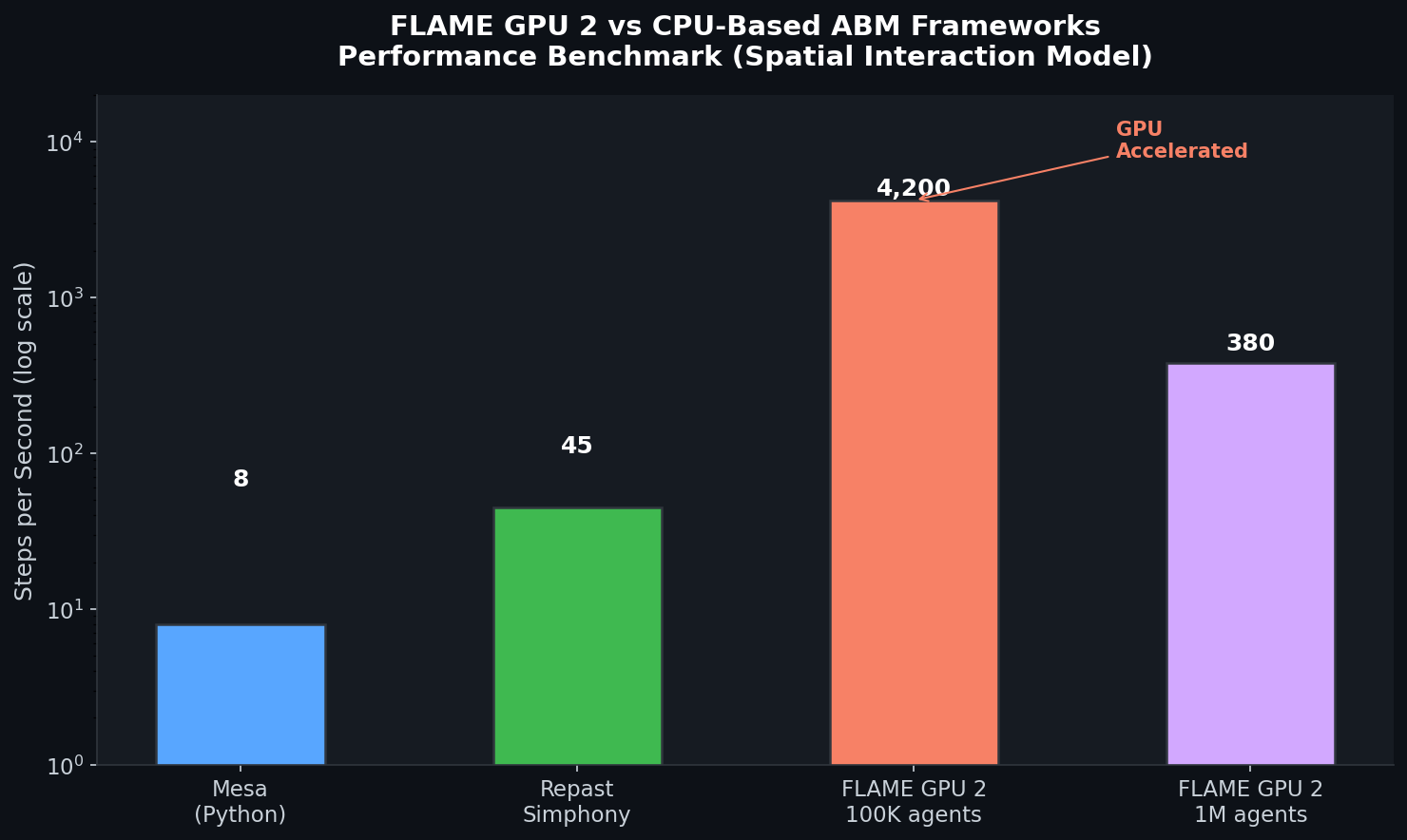
FLAME GPU 2 is an open-source C++/CUDA framework that executes agent-based models entirely on the GPU, delivering 100x or more throughput over CPU-based frameworks like Mesa and Repast Simphony. This article examines its architecture, message communication layer, spatial partitioning, and practical workflow for social-system modelers tackling million-agent simulations.

By Jeff 61 views
Article

GAMA Platform: Spatial Agent-Based Modeling for Complex Social and Environmental Systems

GAMA (GIS & Agent-based Modeling Architecture) is an open-source, spatially explicit agent-based modeling platform that treats real-world GIS data as a first-class citizen. This article examines GAMA's GAML domain-specific language, native shapefile and raster integration, built-in batch experiment framework, and multi-level agent architecture. For technical teams building spatially grounded social simulations — from epidemic spread to urban mobility — GAMA is one of the most capable open-source tools available.

By Jeff 239 views
Article

AnyLogic Pedestrian Library: Simulating Crowd Behavior and Evacuation Dynamics

AnyLogic Pedestrian Library combines the Social Force Model with statechart-driven behavioral logic for production-grade crowd simulation. This article examines the physics engine, behavioral layering, calibration workflow, and performance strategies for large-scale pedestrian models. From airport terminal optimization to stadium evacuation analysis, it is one of the most complete pedestrian modeling toolkits available today.

By Jeff 192 views
Article

Repast Simphony: Statecharts and Priority Scheduling for Complex Social Simulations

Repast Simphony is a mature, Java-based agent-based modeling platform developed at Argonne National Laboratory that combines UML-style statechart-driven agent behavior with a priority-aware tick scheduler. This article examines how statecharts enable auditable, state-dependent agent logic and how the priority scheduling API eliminates subtle ordering artifacts in large-scale social simulations. Technical teams building production-grade models of labor markets, organizational dynamics, or epidemiological systems will find Repast Simphony's architecture uniquely suited to their needs.

By Jeff 67 views
Article

Mesa: Python-Native Agent-Based Modeling for Social System Simulation

Mesa is an open-source Python framework that brings agent-based modeling directly into the scientific Python ecosystem, enabling researchers to build, analyze, and visualize complex social-system simulations using NumPy, pandas, and Jupyter. This article examines Mesa's core architecture, its powerful batch_run parameter-sweep utility, and best practices for building rigorous, reproducible ABM studies. From opinion-dynamics models to organizational behavior simulations, Mesa eliminates toolchain friction for teams already working in Python.

By Jeff 200 views
Article

MASON: High-Performance Agent-Based Simulation for Large-Scale Social Systems

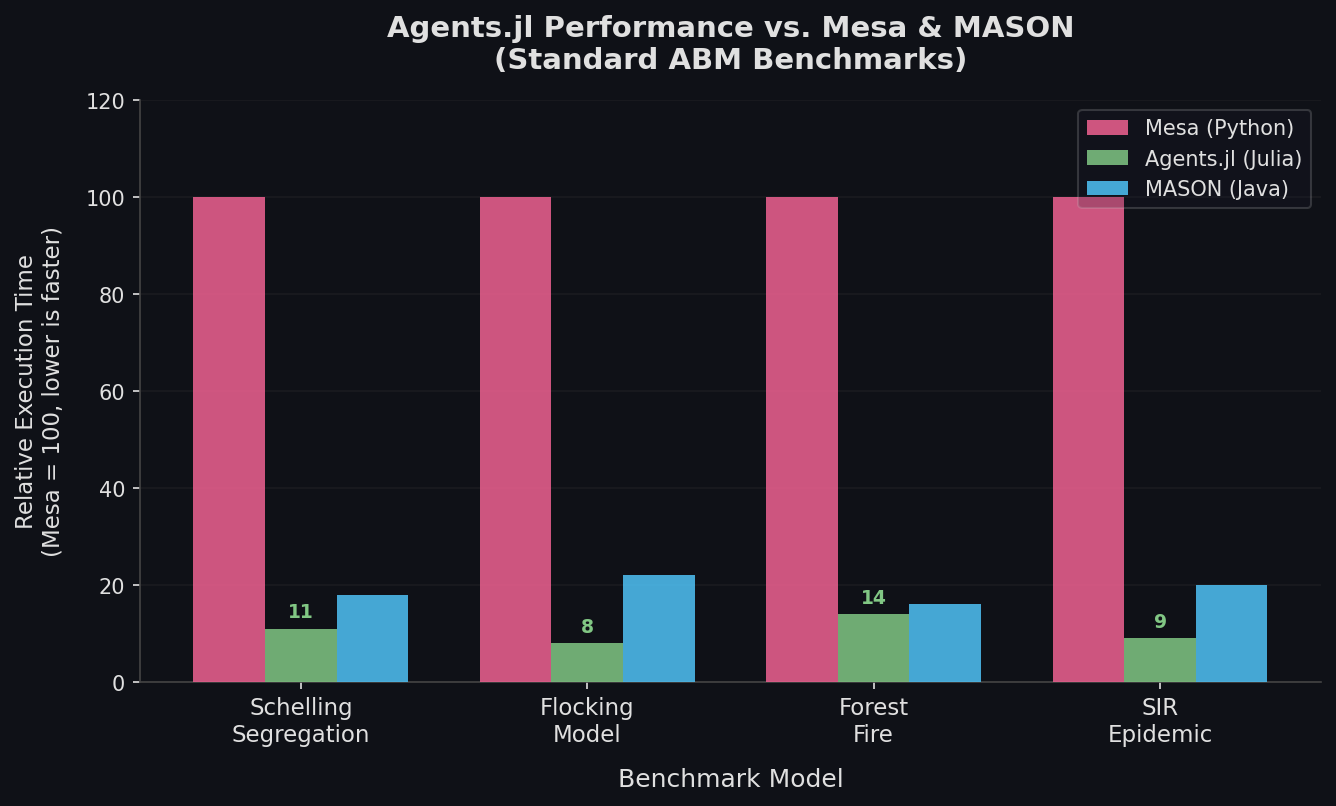
Discover MASON, a Java-based agent-based modeling framework optimized for large-scale social system simulations. Learn how its high-performance architecture, distributed computing capabilities, and efficient scheduling enable researchers to model millions of agents with unprecedented computational speed.

By Jeff 171 views