
Skip to content

Energy & Power Systems

Electrical grids, renewable integration, power-plant dynamics, smart-grid control

27 articles

News

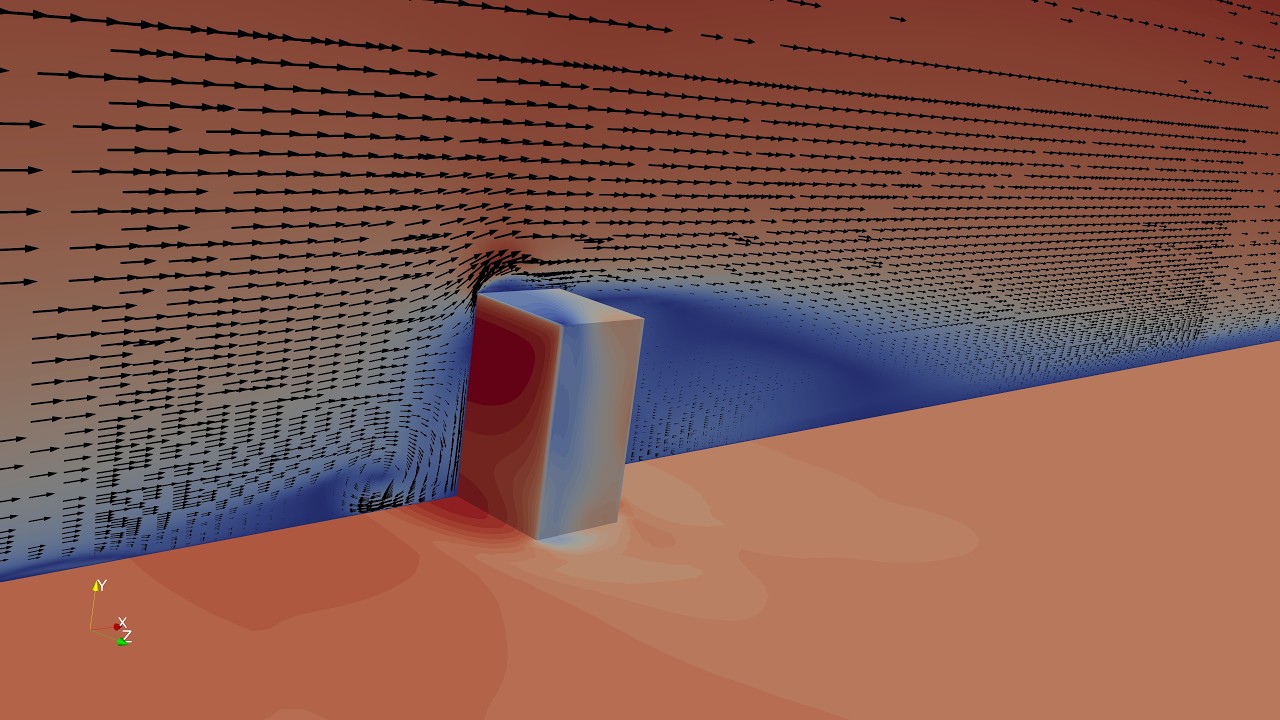
Simcenter STAR-CCM+ 2606: Broad GPU Physics Expansion, New FE Electromagnetic Solver, and AR Visualization

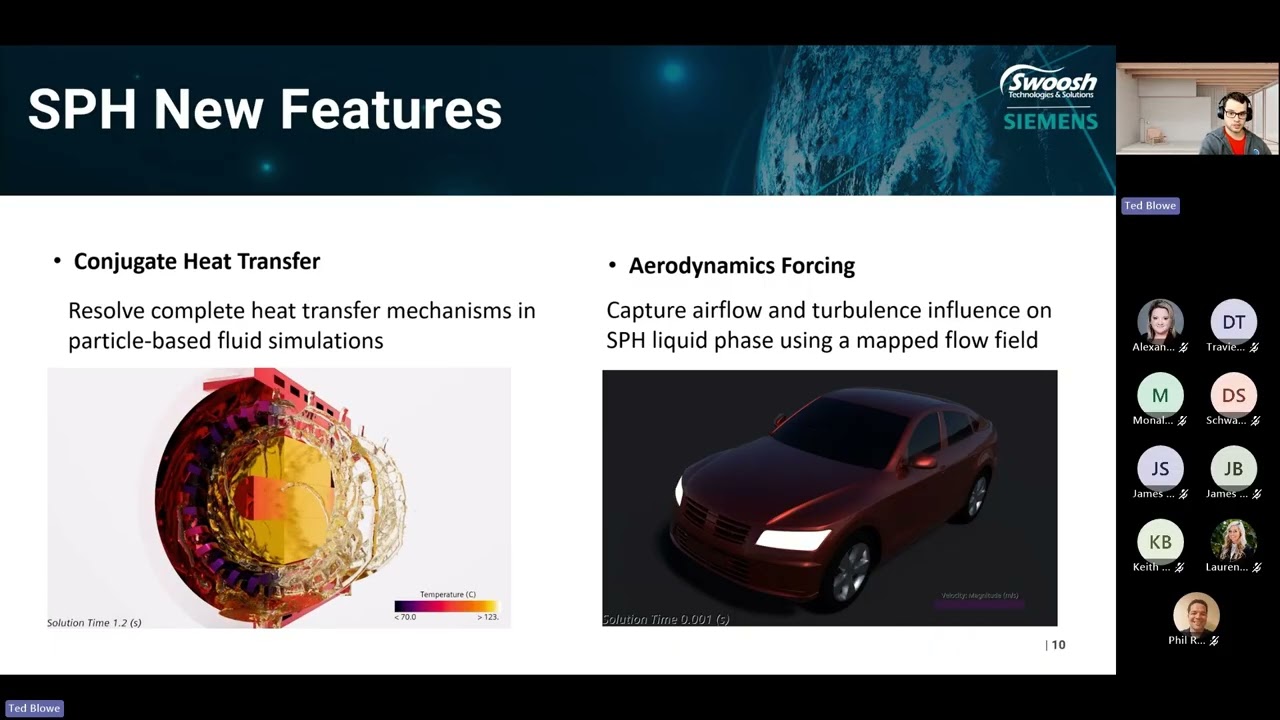
Siemens releases Simcenter STAR-CCM+ 2606 with GPU-native support across eight new physics models—including Eulerian Multiphase, Complex Chemistry, and Lagrangian Multiphase—alongside a new Finite Element Magnetic Field solver for 10x faster e-machine simulation. The update also introduces mixed-reality result visualization and built-in energy monitoring for sustainable HPC workflows.

By Jeff 217 views
News

CONVERGE 6: AI-Driven Automation, Expanded GPU Solver, and ARROW Combustion Workflow Mark a Major Leap for Reacting Flow CFD

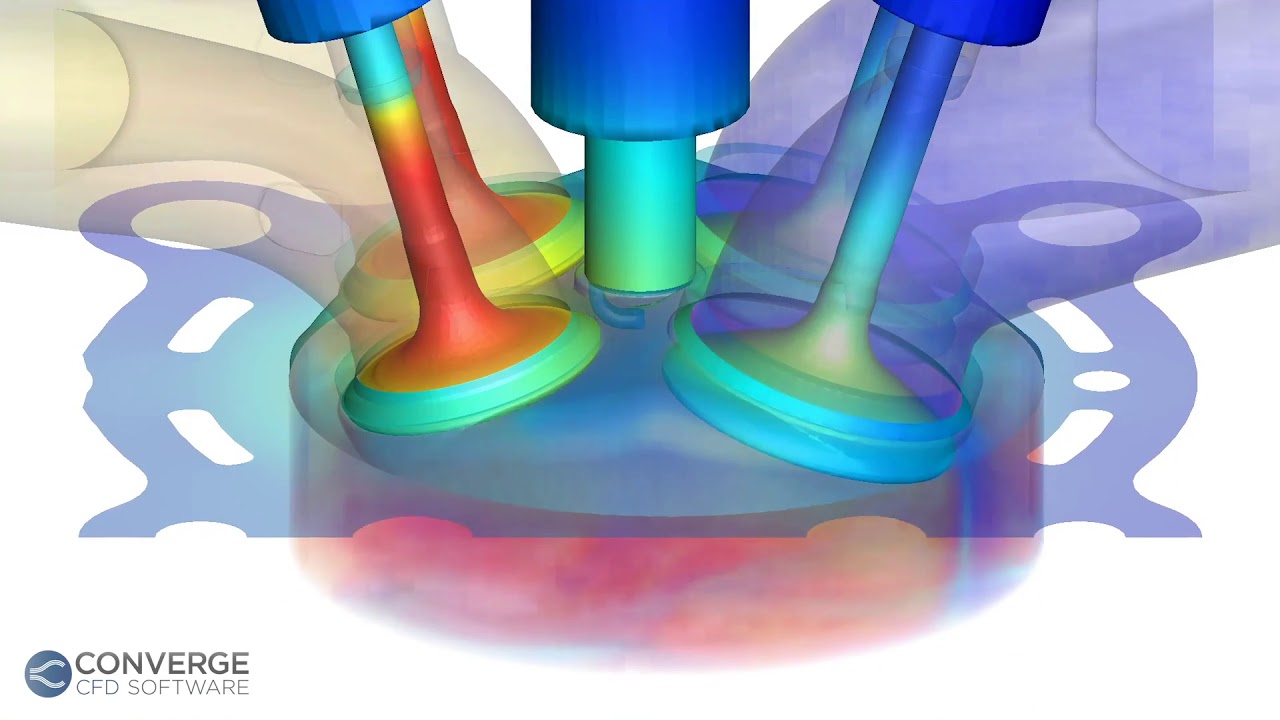
Convergent Science released CONVERGE 6 on July 2, 2026, introducing AI-agent integration with CONVERGE Studio, a substantially expanded GPU solver covering compressible flows, RANS/LES turbulence, and detailed combustion chemistry, plus the new ARROW tool for automated chemical mechanism reduction and tuning. These advances significantly reduce setup time and computational cost for internal combustion engine, gas turbine, and reacting flow simulations.

By Jeff 168 views
News

SIMULIA Abaqus R2026x: GPU-Accelerated Explicit Solver, Butler-Volmer Battery Modeling, and Next-Gen Meshing

Dassault Systèmes' R2026x release marks a landmark update for Abaqus, introducing native GPU acceleration for the Explicit solver on NVIDIA hardware, electrochemical Butler-Volmer kinetics for lithium battery simulation, and a suite of advanced meshing and composite modeling capabilities. The release positions Abaqus as one of the first commercial FEA codes to leverage GPU compute for explicit dynamics.

By Jeff 358 views
News

OpenFOAM 14: Rewritten Combustion Solver, Modular Lagrangian, and Units as a Standard Feature

The OpenFOAM Foundation released version 14 on July 14, 2026, delivering a ground-up rewrite of the XiFluid combustion solver using a MULES-based multiphase approach, an 80%-complete modular Lagrangian framework, and native unit support throughout the case configuration system. With ~938 commits and 130 resolved issues, this release advances open-source CFD for engine combustion, multiphase flows, and complex particle simulations.

By Jeff 354 views
News

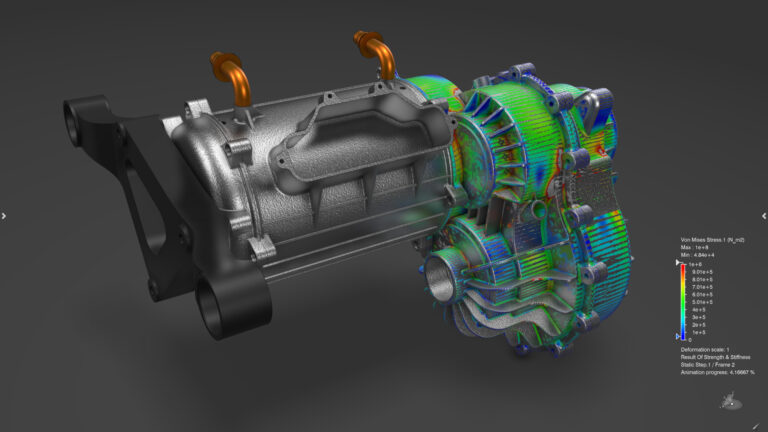
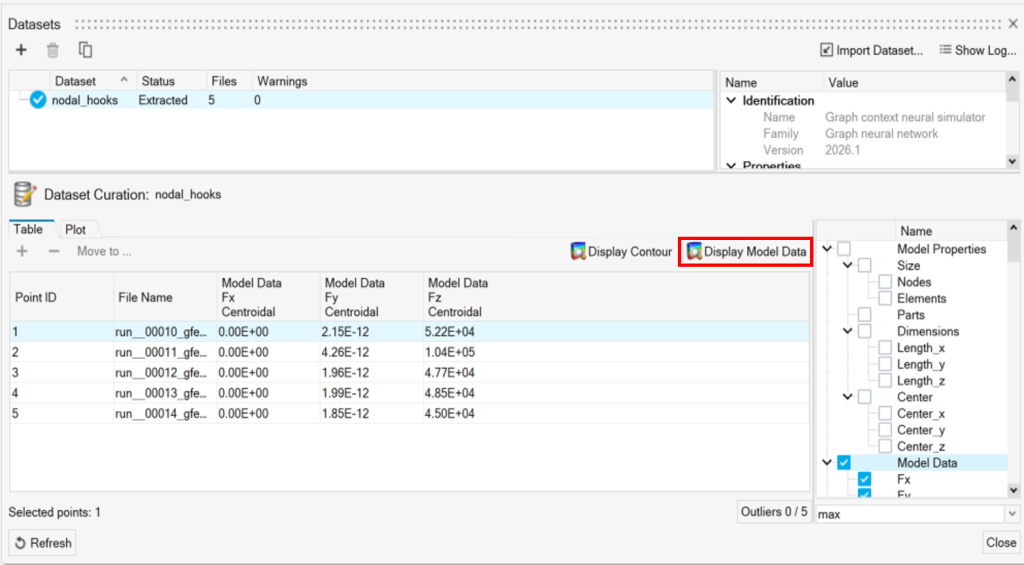
Siemens Simcenter Summer 2026: PhysicsAI Generate, Unified Altair Portfolio, and Meshless Structural Simulation

Siemens has released its Summer 2026 Simcenter update, unifying Siemens and Altair simulation technologies for the first time while introducing Simcenter PhysicsAI Generate — a physics-aware generative AI engine — and expanding geometric deep learning across STAR-CCM+, Inspire, and HyperMesh. The release also integrates Simcenter Simsolid with Designcenter for meshless structural analysis and strengthens multiphysics workflows for electric powertrain development.

By Jeff 720 views
Article

PSIM: Power Electronics Circuit Simulation and Motor Drive Design for Practicing Engineers

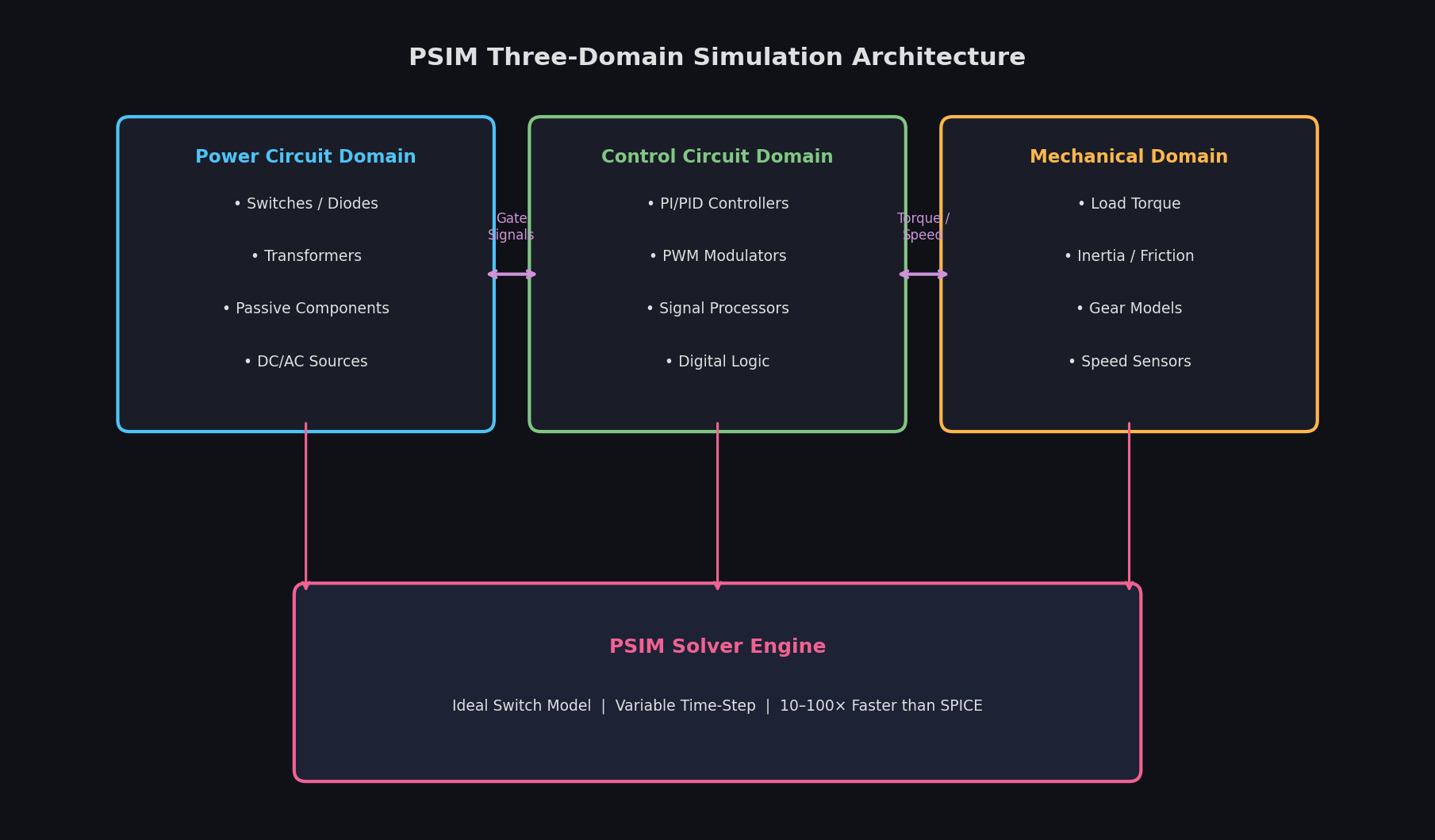
PSIM by Powersim Inc. is a dedicated power electronics simulator that delivers 10–100× faster simulation than SPICE through ideal switch models, enabling rapid control-loop design, motor drive FOC validation, and thermal loss analysis. This article examines PSIM's three-domain architecture, the SmartCtrl automated compensator synthesis workflow, the Motor Drive Module for PMSM field-oriented control, and the Thermal Module for Si IGBT versus SiC MOSFET loss comparison. Engineers will find practical guidance on integrating PSIM with MATLAB/Simulink via SimCoupler and generating DSP firmware with SimCoder.

By Jeff 651 views
News

GT-SUITE 2026: AI.advisor, Hydrogen Ecosystem Simulation, and GT-FEMAG Designer Headline Major Release

Gamma Technologies has released GT-SUITE v2026, introducing AI.advisor — a generative AI assistant embedded in the simulation environment — alongside expanded hydrogen and fuel cell modeling capabilities, 3D battery swelling analysis, and the new GT-FEMAG Designer for electric motor topology iteration. RAM usage for large models is reduced by up to 4x, and parallel metamodel training with FMU export accelerates AI-driven design workflows.

By Jeff 422 views
Article

RTDS Technologies RSCAD: Real-Time Digital Simulation for Power System Protection and Control Testing

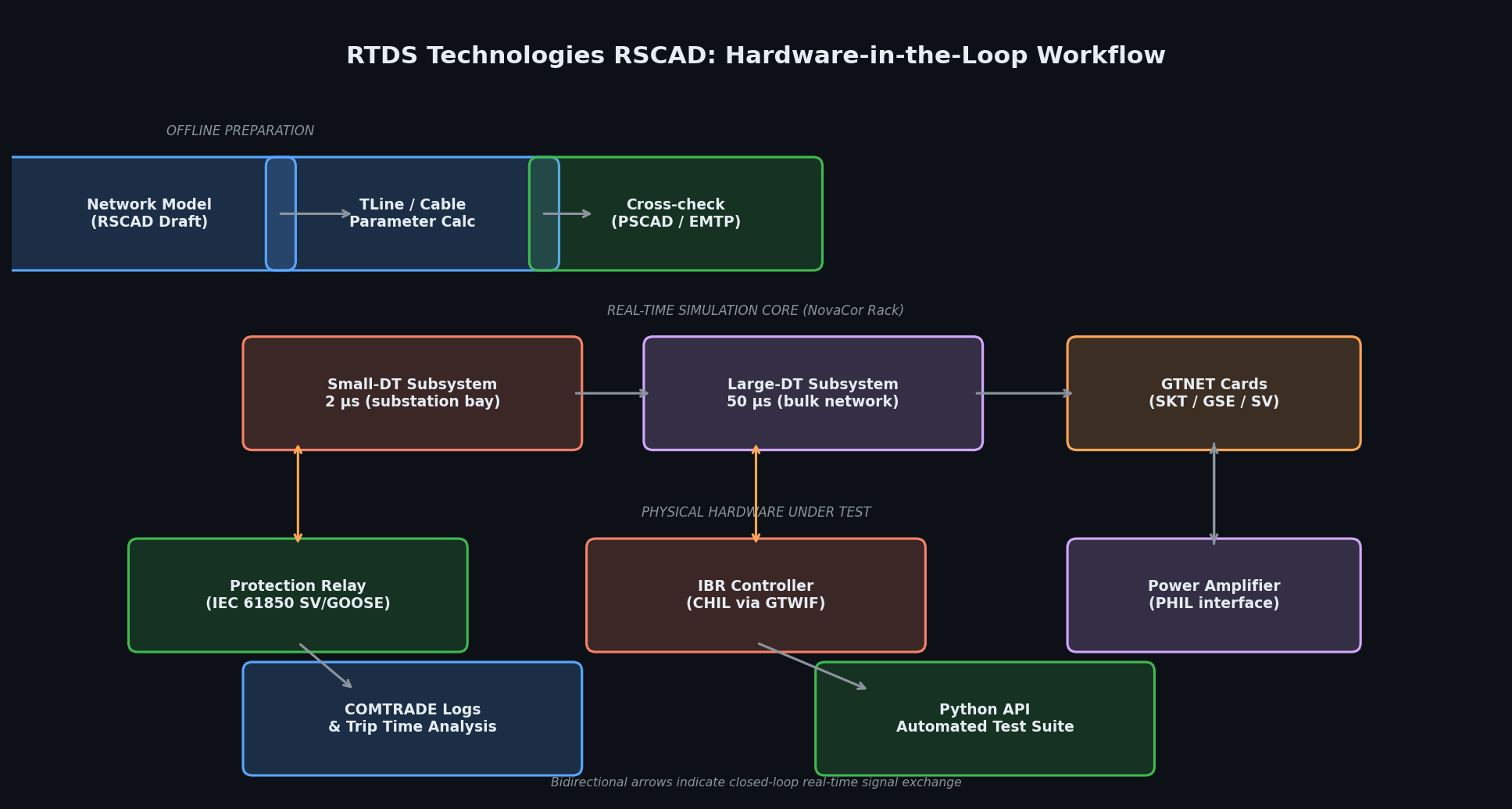
RTDS Technologies' RSCAD software suite delivers true electromagnetic-transient simulation at time steps as small as 2 µs, enabling closed-loop hardware-in-the-loop testing of protection relays, HVDC controllers, and inverter-based resources. This article examines RSCAD's NovaCor hardware architecture, multi-rate subsystem partitioning, IEC 61850 GTNET interface configuration, and Python-based automated test workflows. Engineers will find practical guidance on relay trip-time validation, IBR controller CHIL setup, and best practices for production-grade real-time simulation studies.

By Jeff 587 views
Article

Simscape Electrical: Hardware-in-the-Loop Simulation for Power Converter Design and Validation

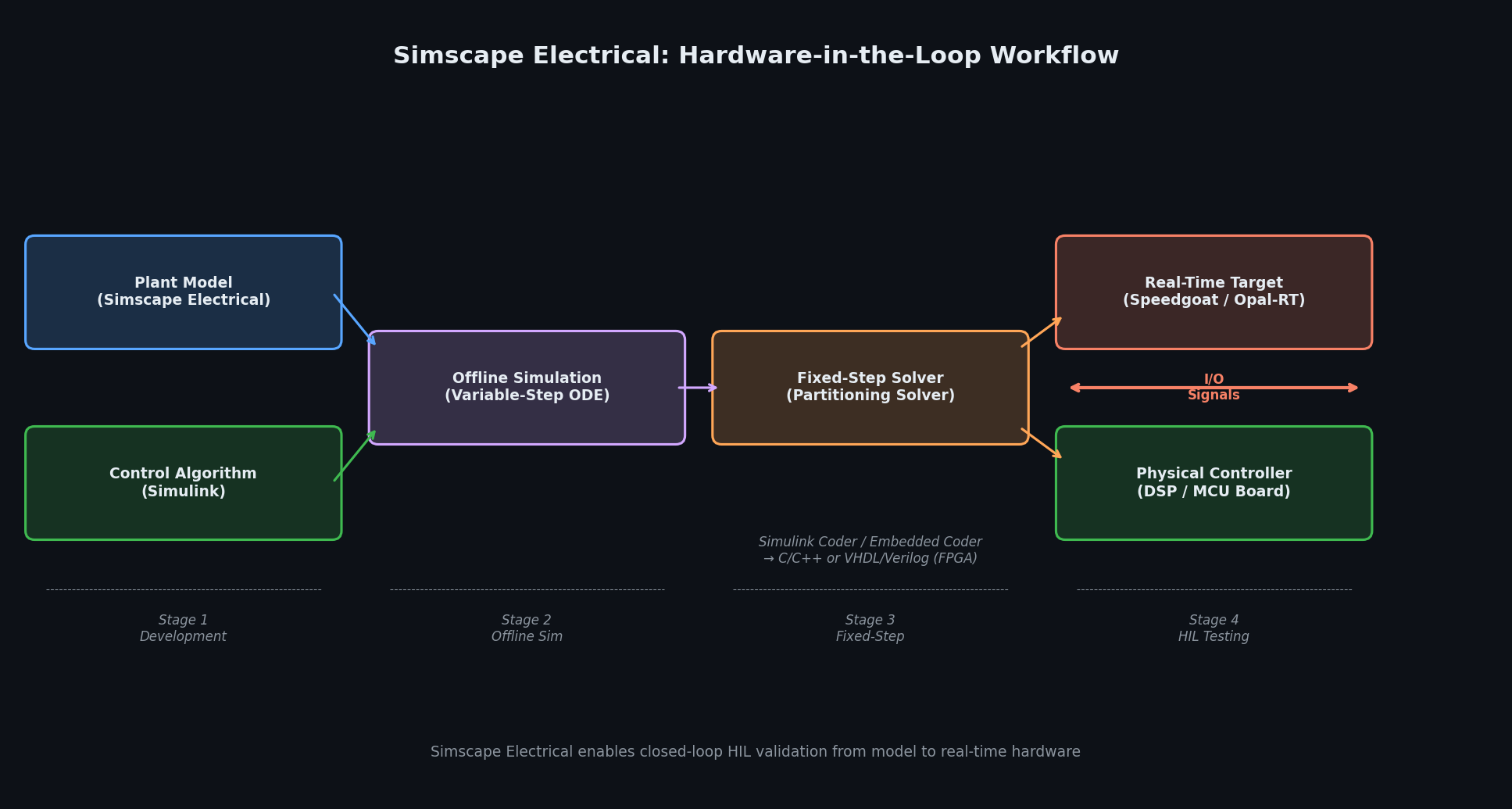
Simscape Electrical provides a physics-based, DAE-driven environment for modeling power converters, machines, and grid-connected systems within MATLAB/Simulink. Its Hardware-in-the-Loop (HIL) workflow — spanning offline simulation, fixed-step solver transition, automated code generation, and real-time deployment — enables engineers to validate converter control algorithms on physical hardware before committing to prototype fabrication.

By Jeff 332 views
News

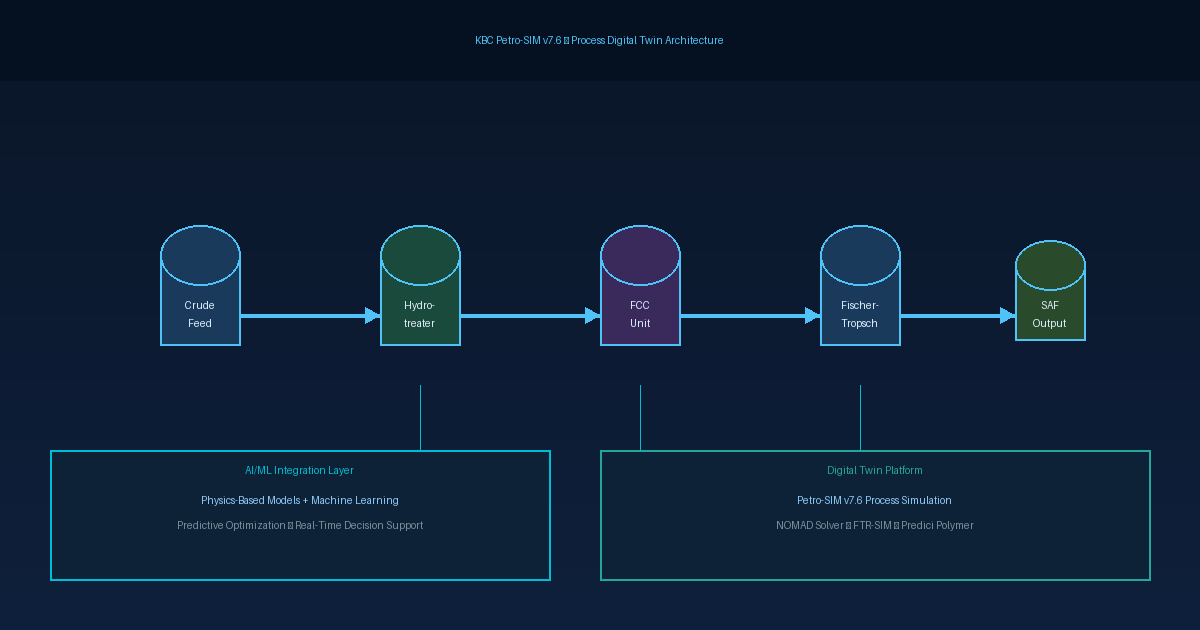
KBC Petro-SIM v7.6: AI-Integrated Digital Twin Platform Advances Process Simulation for Energy Transition

KBC (A Yokogawa Company) has released Petro-SIM v7.6, a major update to its flagship process simulation platform that combines first-principles physics modeling with AI/ML integration, a new NOMAD blackbox optimization solver, and a Fischer-Tropsch reactor model for sustainable aviation fuel production. The release delivers up to 30% faster solving times for hydroprocessing simulations and introduces advanced polymer modeling powered by Predici.

By Jeff 787 views
Article

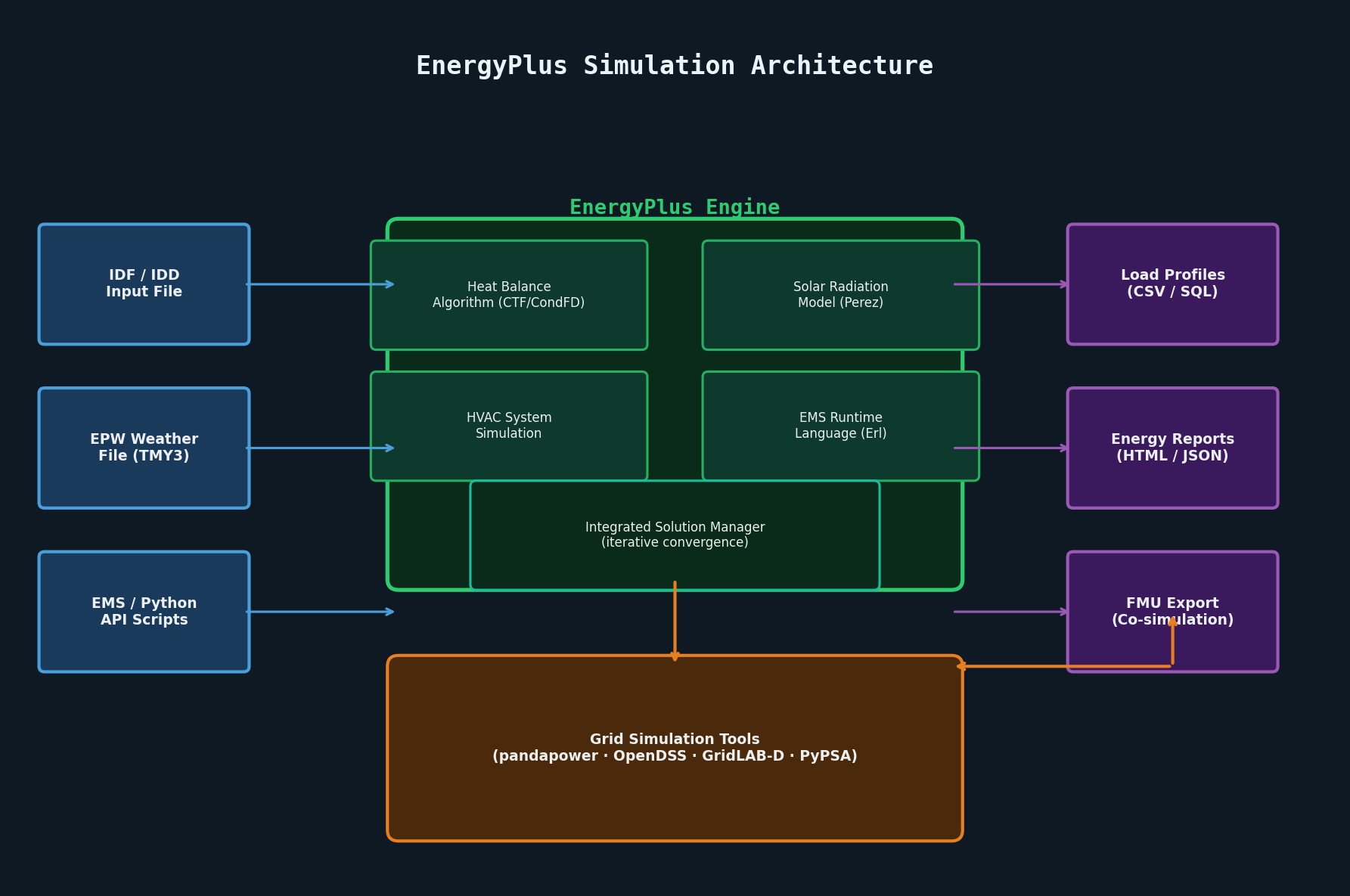
EnergyPlus: Building Energy Simulation for Demand Response and Grid-Interactive Building Design

EnergyPlus is the DOE's industry-standard whole-building energy simulation engine, enabling engineers to model sub-hourly thermal and electrical behavior of buildings with high fidelity. Its EnergyManagementSystem (EMS) and Python API allow custom demand response control logic, pre-cooling strategies, and battery dispatch algorithms to be scripted directly into the simulation. This article explores EnergyPlus's heat balance architecture, EMS workflow, and practical methods for generating high-resolution load profiles that feed into grid simulation tools.

By Jeff 448 views
News

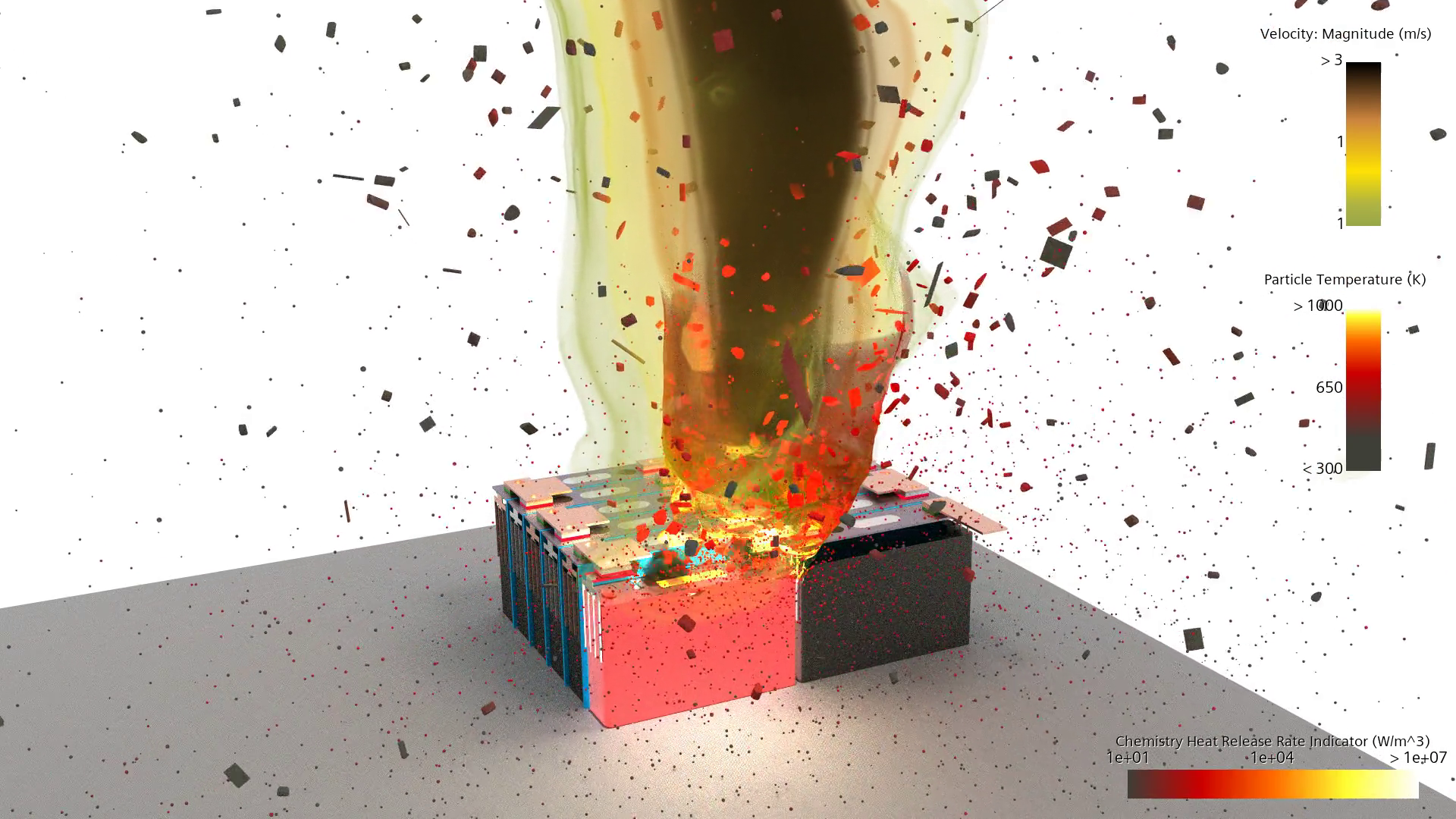
AVL Simulation Suite 2025 R2: GPU-Accelerated Battery Safety, Hydrogen Electrolyzer Modeling, and AI-Driven Design Exploration

AVL has released its Simulation Suite 2025 R2, introducing GPU-accelerated battery thermal runaway simulation in FIRE M, a new PEM electrolyzer generator in CRUISE M for hydrogen system modeling, and AI-driven design exploration tools. The update targets electrification and sustainable propulsion development with enhanced fidelity and workflow automation.

By Jeff 608 views
Article

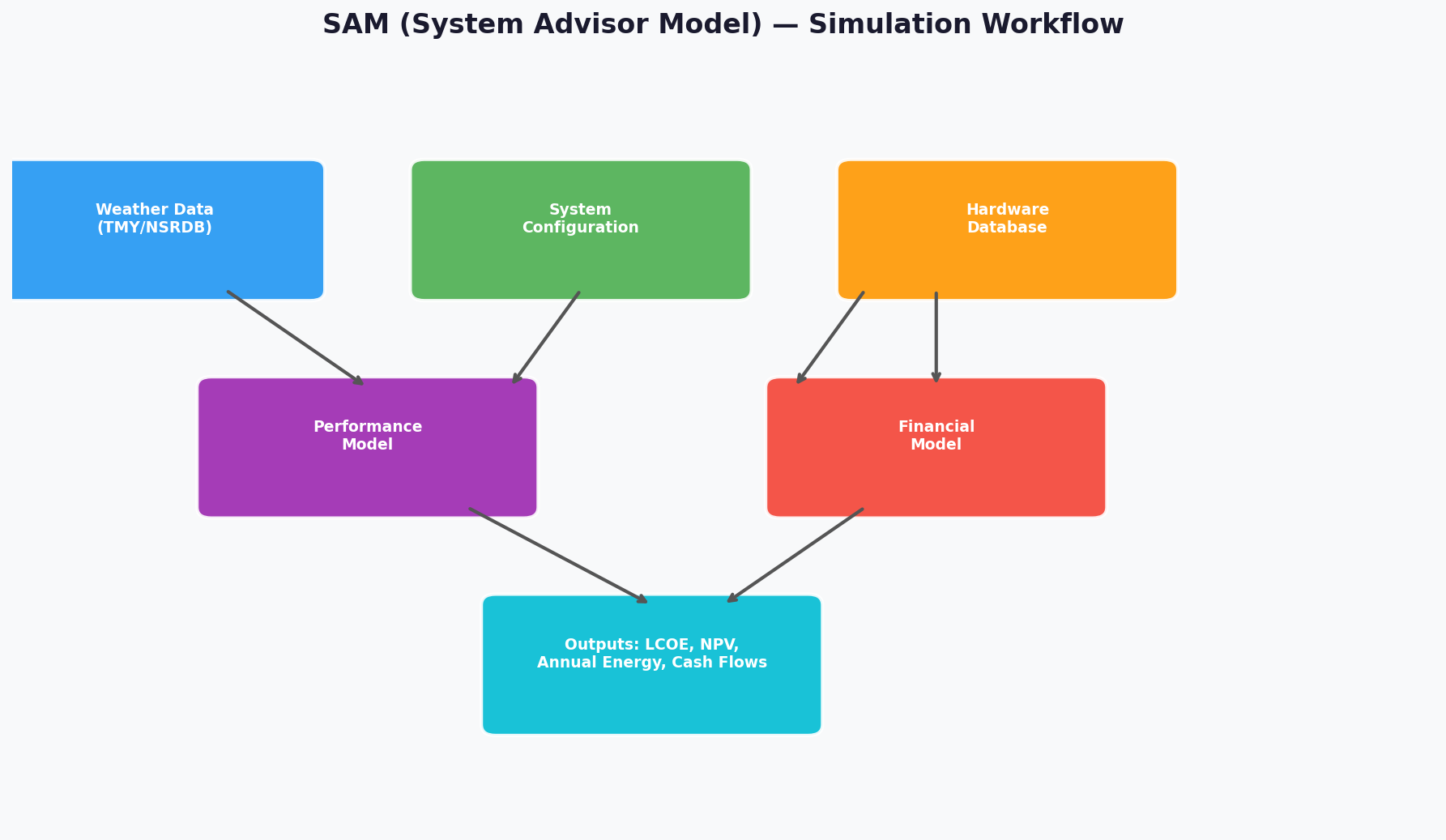
SAM (System Advisor Model): Performance Modeling and Financial Analysis for Renewable Energy Projects

NREL's System Advisor Model (SAM) is the industry-standard tool for techno-economic analysis of renewable energy projects, combining detailed hourly performance simulation with sophisticated financial modeling. This article explores SAM's PV and CSP performance engines, financial model structures including Partnership Flip for tax equity, parametric optimization workflows, and Python scripting via PySAM for automated batch analysis.

By Jeff 777 views
Article

Modelica and OpenModelica: Equation-Based Modeling for Multi-Domain Energy System Simulation

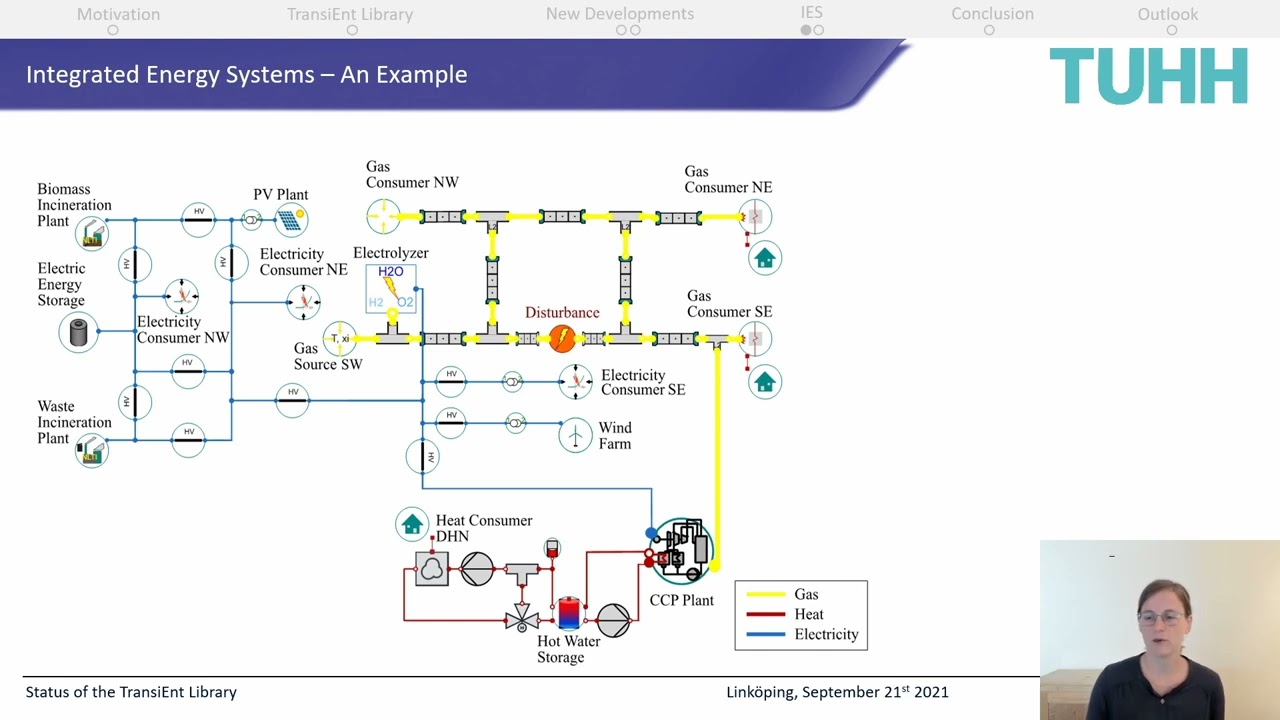
Modelica is an open, equation-based modeling language that enables engineers to simulate coupled electrical, thermal, and control systems in a single unified framework. OpenModelica, the leading open-source implementation, provides a full-featured IDE and compiler at no cost. This article explores key capabilities, practical workflows, and how Modelica compares to other energy simulation tools.

By Jeff 965 views
Article

PyPSA: Sector-Coupled Energy System Optimization for Net-Zero Planning

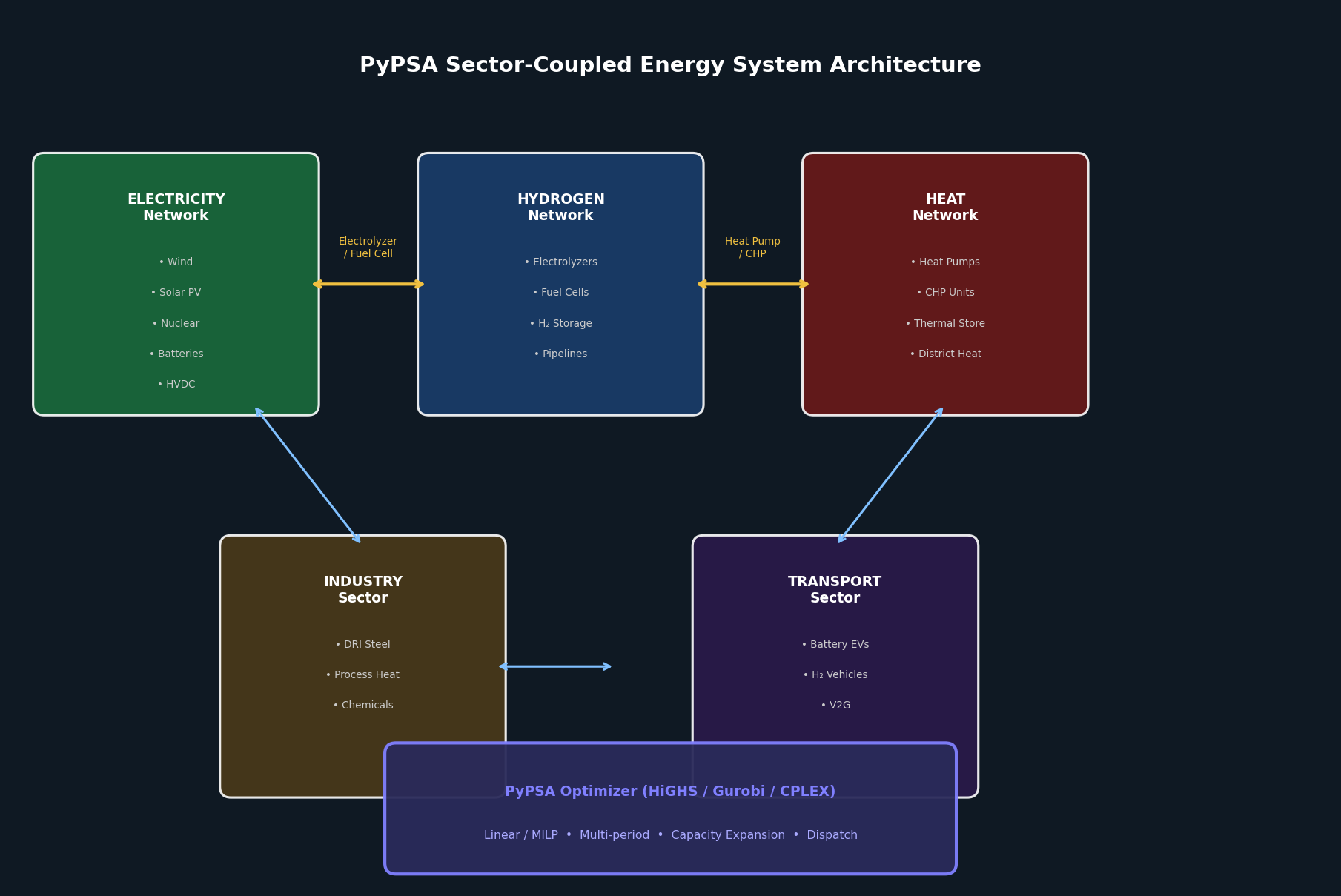
PyPSA (Python for Power System Analysis) is an open-source framework for multi-carrier, multi-period energy system optimization that simultaneously models electricity, hydrogen, heat, and transport networks. This article explores its sector-coupling architecture, multi-period investment optimization capabilities, solver backends, and practical guidance for production-grade net-zero planning studies.

By Jeff 372 views
Article

MATPOWER: Optimal Power Flow Solvers and Extensible OPF Framework for Power System Research

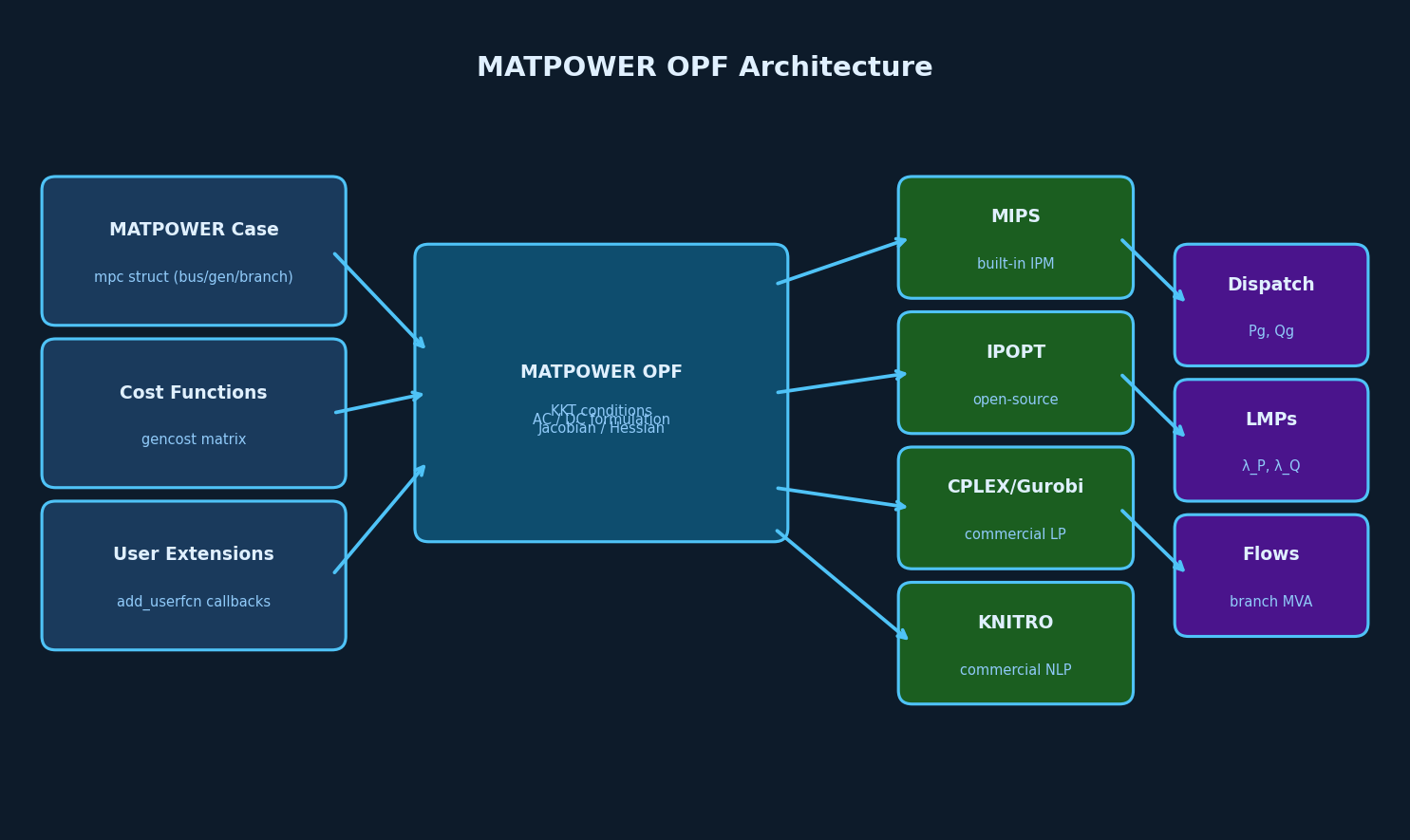
MATPOWER is the open-source MATLAB/Octave power system simulation package that has become the de facto standard for OPF research. This article explores its extensible OPF architecture, solver interfaces (MIPS, IPOPT, CPLEX), LMP computation, sensitivity matrices, and the MOST multi-period scheduling tool — with practical guidance for production-grade grid studies.

By Jeff 527 views
Article

PowerWorld Simulator: Contingency Analysis and Voltage Stability Assessment for Transmission Planning

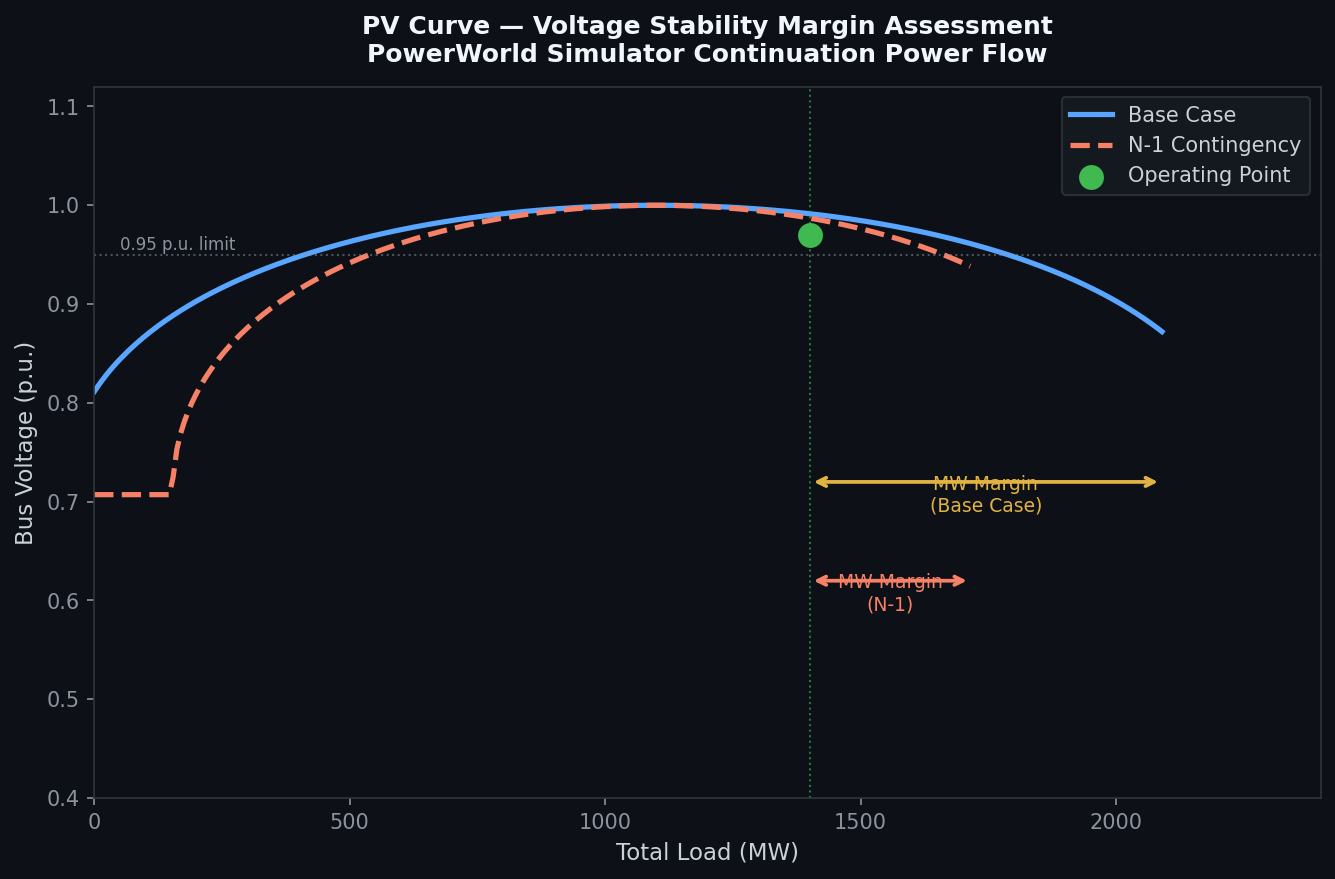
PowerWorld Simulator provides transmission planners with powerful tools for N-1/N-2 contingency screening and voltage stability assessment. This article explores how to configure contingency studies, generate PV and QV curves using continuation power flow, and automate large-scale planning workflows via the SimAuto COM interface. Practical guidance covers solver selection, limit monitoring, reactive margin quantification, and Python-based scripting for production-grade transmission studies.

By Jeff 360 views
Article

pandapower: Python-Native Power System Analysis for Modern Grid Engineers

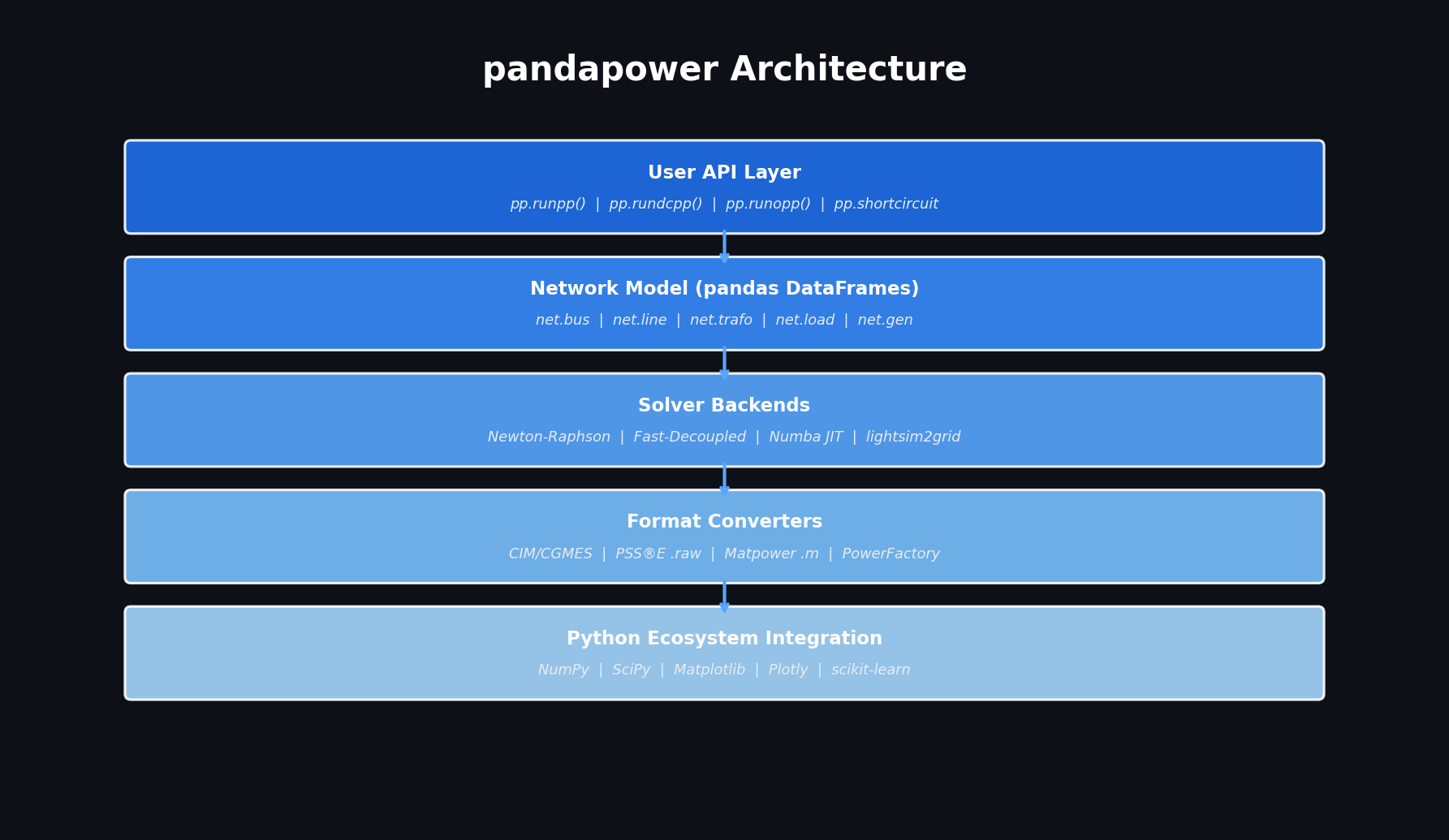
pandapower is an open-source, Python-based power system analysis framework that stores network models as pandas DataFrames, enabling fully scriptable AC/DC power flow, optimal power flow, short-circuit analysis, and N-1 contingency screening. Its seamless integration with the Python scientific ecosystem makes it the tool of choice for engineers building automated, reproducible, and version-controlled grid studies. This article covers core capabilities, solver backends, time-series workflows, and guidance on when pandapower is the right choice.

By Jeff 1706 views